Chapter 7
Focus on eligibility, nonexempt property, recent transfers, discharge questions, and the scope of a flat-fee agreement.
Compare Chapter 7 attorneysIndependent bankruptcy lawyer guidance
Compare Chapter 7 and Chapter 13 experience, attorney fees, payment terms, reviews, credentials, and consultation questions—without paid lawyer rankings.
General information only. This publication is not a law firm or lawyer referral service.

Choose your starting point
Focus on eligibility, nonexempt property, recent transfers, discharge questions, and the scope of a flat-fee agreement.
Compare Chapter 7 attorneysFocus on plan feasibility, mortgage or car arrears, trustee payments, local fee rules, and support during a three-to-five-year case.
Compare Chapter 13 attorneysSeparate court charges, lawyer fees, required courses, plan payments, and services that may cost extra.
Build a bankruptcy cost estimateUse reviews for patterns, then verify license status, disciplinary history, written fee terms, and who will handle the case.
Evaluate reviews and ratingsWhat “best” should mean
A strong candidate explains the chapter being considered, identifies facts that could change the answer, gives written fee terms, and avoids guarantees. A directory score or advertisement cannot establish that fit by itself.
A safer comparison
Consistent questions make quotes and promises easier to compare. Record the chapter, immediate risk, documents reviewed, total fee structure, response process, and likely next decision.
Open the print-ready lawyer checklist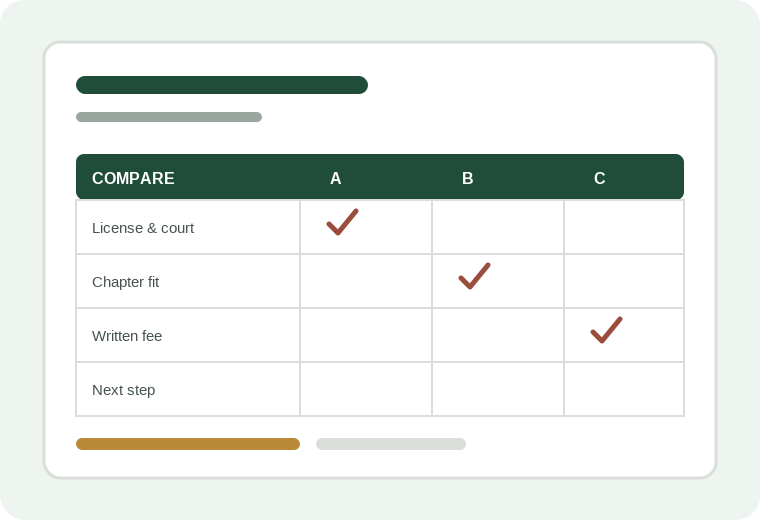
Court costs
As of August 13, 2026, official court sources list a $338 filing fee for Chapter 7 and $313 for Chapter 13. Attorney fees, course costs, payment timing, and extra services vary. Always verify the current court fee before filing.
See the fee worksheetOfficial information
Local preparation
Your residence, county, and court district can affect local forms, procedures, trustee information, and attorney fee practices. Start with a state guide or use the federal court directory to confirm the court serving your address.
More ways to prepare
Compare on evidence
Directories and advertisements can identify candidates, but they cannot decide whether a lawyer fits a particular Chapter 7 or Chapter 13 matter. Use the same records and questions in each consultation so differences in experience, scope, communication, timing, and price are visible.
Does the lawyer regularly handle the chapter and the asset, income, lawsuit, tax, business, or repayment issue involved?
Who reviews the documents, prepares the filing, attends the 341 meeting, handles motions, and answers post-filing questions?
Which services are included, which are excluded, and what event requires a separate agreement or added fee?
Is the license active, is public discipline information available, and can experience claims be checked independently?
What is due before filing, later, or through a plan, and which court, course, record, amendment, or dispute costs are separate?
Bring a concise timeline, current income and expense records, a complete debt list, property and lien information, recent transfers, prior bankruptcy details, and the next urgent date. Ask the lawyer to identify which missing fact could change the chapter or timing. A useful answer explains uncertainty and next steps; it does not guarantee discharge, property protection, plan approval, or a particular creditor response.